What is WordPress Developer
Understand the role, skills, and career paths that define a modern WordPress developer.

“WordPress developer” is a job title you see everywhere, but it can mean very different things. Some people use it for anyone who installs a theme, others for specialists who architect complex plugins, optimize databases, and keep high-traffic sites fast and secure.
In this guide, you’ll learn exactly what a WordPress developer is, what they do day to day, the skills you need, and how to move from “WordPress user” to “WordPress developer” in a structured, professional way.
If you’re completely new to the platform itself, start by making sure you understand what WordPress is, then come back to this guide to map out your development journey.
Prerequisites
You don’t need to be a professional programmer already, but you’ll get the most from this article if you:
- Have logged into a WordPress dashboard at least once and can create or edit a post.
- Understand basic website concepts like domain, hosting, and SSL.
- Are comfortable installing themes and plugins from the WordPress admin area.
- Are willing to learn some coding (PHP, HTML, CSS, and JavaScript) over time.
Step 1: Understand What a WordPress Developer Does
A WordPress developer is a web developer who specializes in building, extending, and maintaining websites powered by WordPress. Instead of just configuring existing themes and plugins, they write and manage code to solve problems that WordPress can’t handle out of the box.
Their responsibilities often include:
- Creating custom themes or child themes that match a brand’s design and UX requirements.
- Developing plugins that add new features, integrate external services, or modify core behavior using hooks.
- Optimizing performance (database queries, asset loading, caching) so sites load quickly and scale.
- Improving security by hardening logins, sanitizing input, and following secure coding best practices.
- Troubleshooting conflicts between themes, plugins, and hosting environments.
If you want a broader sense of the platform’s capabilities that developers build on top of, read about what WordPress does so you can see how development work fits in.
Step 2: See How WordPress Developers Differ from Designers and Users
Because WordPress is so flexible, the term “developer” gets mixed up with other roles. It helps to separate them clearly:
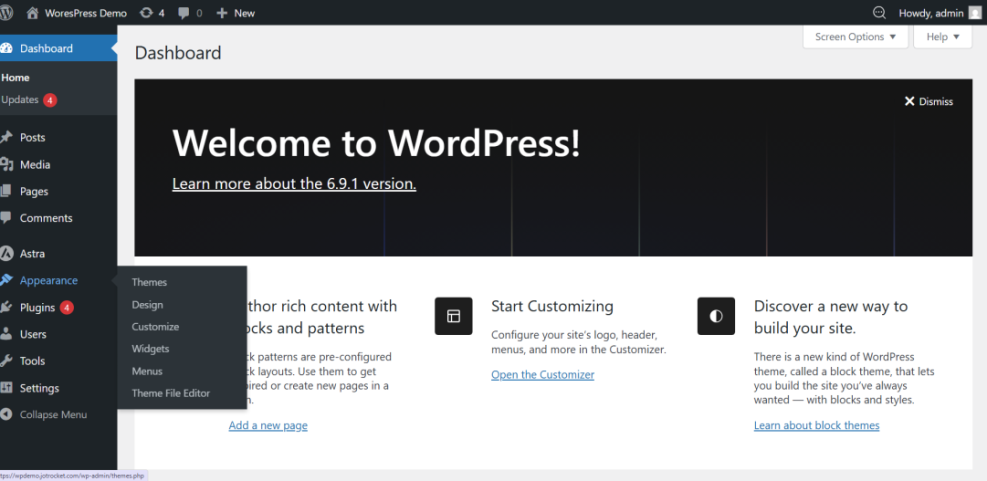
- WordPress user/content editor: Logs into the dashboard to publish posts, manage pages, and update menus and widgets.
- WordPress implementer/site builder: Uses themes, page builders, and plugins to assemble a site without touching much code.
- WordPress designer: Focuses on visual identity, UX, layouts, typography, and color systems (often delivering Figma or Photoshop designs).
- WordPress developer: Writes PHP, JavaScript, HTML, and CSS; works with hooks, APIs, and databases to implement designs and features in code.
In smaller projects one person may do all of these jobs, but in professional environments, “developer” generally implies ownership of the codebase and technical decisions, not just installing plugins.
Step 3: Learn the Core Technical Skills for WordPress Development
To call yourself a WordPress developer with confidence, you should build skills in a few key areas.
- WordPress core concepts: The template hierarchy, the Loop, actions and filters (hooks), custom post types, taxonomies, widgets, menus, and user roles.
- PHP fundamentals: Variables, arrays, functions, classes, conditional logic, basic OOP, and how WordPress uses PHP to generate pages.
- HTML & CSS: Semantic markup, responsive layouts, flexbox/grid, typography, and styling blocks, widgets, and template parts.
- JavaScript: DOM manipulation, events, and modern JS patterns; familiarity with React is helpful for working with the Block Editor (Gutenberg).
- Database basics: Understanding MySQL, how WordPress stores posts, users, and options, and how to write efficient queries when needed.
- Developer tools: Local development environments, browser dev tools, debugging, and Git for version control.
If you’re starting from zero, here’s a safe learning order:
- Get comfortable using the WordPress dashboard as a site owner.
- Learn basic HTML and CSS so you can control layouts and styling.
- Add PHP fundamentals and begin editing child theme templates.
- Study WordPress hooks, template hierarchy, and custom post types.
- Introduce JavaScript for interactivity and modern block-based workflows.
Step 4: Explore Common WordPress Development Tasks
Once you understand the basics, your day-to-day work as a WordPress developer will revolve around solving specific problems with code. Here are some typical tasks.
Theme development tasks
- Creating a child theme to safely override templates and styles without touching the parent theme.
- Building custom page templates (e.g., landing pages, portfolio layouts, or resource hubs).
- Registering widget areas, menus, and custom image sizes.
- Adding or modifying theme support for features like featured images, post formats, or custom logos.
- Integrating design systems and typography guidelines into the theme’s CSS/SASS.
Plugin development tasks
- Hooking into actions and filters to change behavior without editing core files or theme code.
- Registering custom post types and taxonomies for structured content like events, products, or case studies.
- Creating admin settings pages so site owners can configure features without editing code.
- Integrating third-party APIs (CRMs, payment gateways, marketing tools) with WordPress.
- Writing shortcodes or blocks that editors can use inside posts and pages.
Maintenance and optimization tasks
- Auditing plugins and themes to remove unused or conflicting components.
- Improving performance with caching, image optimization, and fewer external HTTP requests.
- Hardening security by limiting login attempts, enforcing strong passwords, and sanitizing user input.
- Troubleshooting errors, white screens, and layout issues after updates or code changes.
Step 5: Choose Your WordPress Developer Career Path
There isn’t just one way to work as a WordPress developer. Depending on your goals and personality, different paths may suit you better.
- Freelance WordPress developer: Work directly with clients, often small businesses or nonprofits, delivering complete sites and ongoing maintenance.
- Agency developer: Join a team that designs, builds, and supports sites for many clients; you’ll collaborate with designers, PMs, and other devs.
- In-house developer: Focus on a single organization’s sites or product ecosystem, often in marketing or product teams.
- Product-focused developer: Build and maintain premium themes, plugins, or SaaS products that integrate with WordPress.
Early in your career, most of your work will be customizing existing solutions. As you gain experience, you’ll architect systems, improve performance, and mentor others.
Step 6: Build Portfolio Projects as a New WordPress Developer
Clients and employers don’t just want to hear that you “know WordPress.” They want to see real projects that demonstrate your skills and thought process.
- Set up a local or staging environment: Use a local server stack or managed WordPress host so you can experiment safely.
- Build a custom child theme: Take an existing theme and create a child theme with a redesigned blog layout or custom homepage.
- Develop a small plugin: For example, a plugin that registers a “Testimonials” custom post type and displays them via a shortcode or block.
- Document your work: Add README files, code comments, and screenshots explaining what you built and why.
- Publish a portfolio: Create a simple portfolio site (it can be WordPress!) showcasing each project and your role.
Step 7: Follow Best Practices for Reliable WordPress Development
Writing code that “works on my machine” is only the beginning. Professional WordPress developers follow practices that keep sites fast, secure, and maintainable.
- Use staging and version control: Test changes on a staging site, track code with Git, and never push untested code to production.
- Respect WordPress architecture: Use hooks, child themes, and custom plugins instead of editing core files or third-party themes directly.
- Prioritize security: Sanitize and escape data, validate permissions with capability checks, and avoid exposing sensitive information.
- Optimize performance: Minimize database queries, enqueue scripts and styles correctly, and integrate caching and image optimization.
- Think about editors: Build intuitive interfaces (settings pages, custom fields, blocks) so non-technical users can manage content safely.
For a broader learning roadmap around performance, security, and SEO, keep the WordPress guides and tutorials overview handy as you expand your skills.
Level Up from WordPress User to WordPress Developer
A WordPress developer is more than a “plugin installer.” It’s a developer who understands how WordPress works under the hood and can use that knowledge to build fast, secure, and flexible sites that solve real business problems.
By learning the core skills, practicing with real projects, and adopting professional best practices, you can move from simply using WordPress to confidently building and maintaining custom solutions—whether you freelance, join an agency, or work in-house.
Further Reading
- Developer Hooks for Better WordPress Performance (with Code Examples)
- How to Create a Child Theme in WordPress
- Developer Hooks for WordPress Database and File Optimization (with Code Examples)
- Developer Hooks for Optimizing WordPress Plugins (with Code Examples)
Frequently Asked Questions
Do I need to know how to code to become a WordPress developer?
How long does it take to become a WordPress developer?
What should I do if I break a site with bad WordPress code?
How can I keep WordPress sites secure as a developer?
How do I safely test changes before updating a live WordPress site?