Clone a page in WordPress whenever you want to reuse a layout for a new service, landing page, or location page. Recreating everything by hand is slow and error prone, so cloning saves time and keeps your design consistent across similar pages.
In this step by step guide, you will learn several safe ways to clone a page in WordPress, from using a dedicated duplicate page plugin to copying content without a plugin. By the end, you will be able to duplicate any page layout, adjust the content, and publish it without breaking your design or confusing visitors.
What You Need to Start
- Access to your WordPress admin dashboard with an Administrator or Editor account.
- At least one existing page whose layout you want to copy.
- Basic familiarity with the WordPress dashboard, including Pages, Plugins, and the editor you use (Block Editor or Classic Editor).
- A recent site backup from your hosting control panel or a backup plugin, especially if you are installing new plugins.
- Optional but recommended a staging site where you can test cloning methods before doing them on a busy live site.
Step 1: Plan the Page You Want to Clone in WordPress
Before you clone a page in WordPress, be clear about the result you want. This helps you pick the right method and avoid copying more than you need, which can create duplicate content problems or messy navigation.
- Open your WordPress dashboard and go to Pages » All Pages.
- Look at the page you want to copy and note why you want to duplicate it, for example a service layout, a sales page, or a location page.
- Decide whether you need an exact clone of the page in WordPress (title, layout, SEO settings, featured image) or just the content layout.
- Decide if you will reuse this layout only once, or many times as a template for future pages.
- Write down the new page’s working title and where it should live in your menu structure or internal links.
Verify success at this step by having a short written note such as “Clone the Service Page layout for a new Service B page and change only the text and images.” This clarity keeps you focused as you clone pages and prevents messy duplicates across your site.
Common Reasons to Clone or Reuse a Page Layout
- Creating a new service or product page with the same layout but different content.
- Building multiple location pages that share the same structure.
- Testing a new layout variation as a draft without touching the live page.
- Quickly spinning up landing pages for ads or campaigns using a proven layout.
Step 2: Install a Duplicate Page Plugin to Clone Content
The easiest and safest way to clone a page in WordPress is by using a dedicated duplicate page plugin. These plugins add a Clone or Duplicate link to your pages list and copy metadata, featured images, and other settings for you.
- In your WordPress dashboard, navigate to Plugins » Add New.
- Use the search bar to look for keywords such as duplicate page, duplicate post, or clone page.
- Choose a plugin that has many active installations, recent updates, and strong reviews.
- Click Install Now, then click Activate to enable the plugin.
- After activation, go to Settings or the plugin’s own menu entry and review options such as what to copy (title, excerpt, featured image, taxonomies) and the default status of the cloned page (draft, pending, or published).
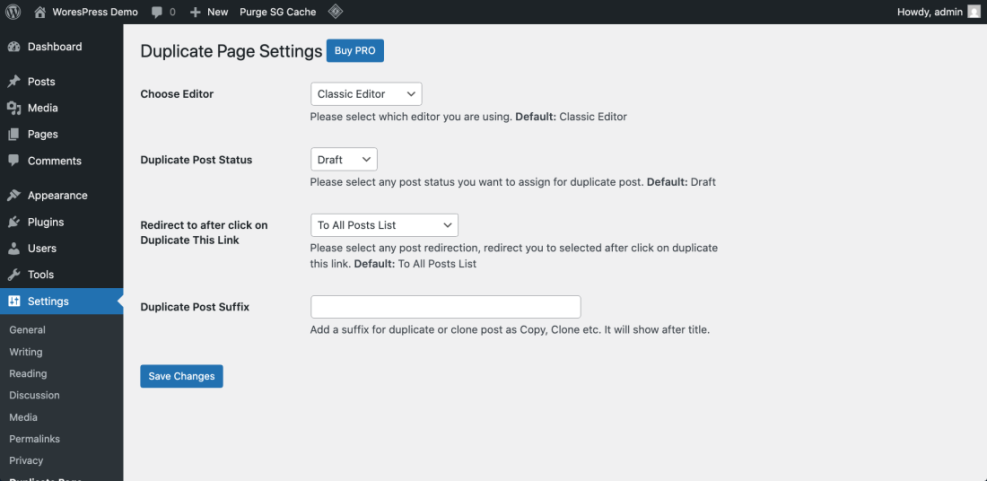
Verify success when you return to Pages » All Pages and see a new link such as Clone, Duplicate, or Copy to new draft beneath each page title. This means you can now clone pages in WordPress with a single click.
Step 3: Clone a Page in WordPress From the Pages Screen
Once your duplicate page plugin is active, you can clone any page directly from the Pages list. This is the main workflow most site owners use to clone a page in WordPress for new layouts or campaigns.
- From your dashboard, go to Pages » All Pages.
- Find the page you want to clone, then hover your mouse over its title to reveal additional links.
- Click the new link added by your plugin such as Clone, Duplicate, or New Draft.
- Wait for WordPress to create the clone. Depending on the plugin, you may stay on the list view or be taken directly into the editor for the cloned page.
- Open the cloned page in the editor and confirm that the layout, blocks, images, and settings have been copied correctly.
Verify success when you see a new draft page with almost the same title as the original (often with “Copy” or a similar suffix), the same layout, and the same content. You have successfully cloned a WordPress page and are ready to customize it.
Quick Comparison of WordPress Page Cloning Methods
Use this table to quickly choose the best way to clone a page in WordPress for your situation.
| Method | Where You Use It | Main Purpose |
|---|---|---|
| Clone Page With Plugin | WordPress dashboard » Pages » All Pages | Safely duplicate an entire WordPress page including layout, featured image, and most settings in one click. |
| Copy Content Without Plugin | Page editor » Options menu » Copy all content | Reuse the block layout of a page while creating a fresh draft manually, without installing any plugin. |
| Duplicate Page Builder Layout | Page builder editor » Duplicate or Save as template | Clone a page layout built with a visual builder and reuse it as a template for new landing pages. |
| Clone Page on Staging Site | Staging dashboard » Pages » All Pages | Experiment with new layouts and cloned pages in a safe staging environment before changing the live site. |
| Export and Import Page Layouts | Theme or builder tools » Export Import | Move page layouts between sites that use the same theme or builder by exporting and importing designs. |
Step 4: Clone a Page Layout Without a Plugin
If you prefer not to install another plugin, you can still clone a page in WordPress by copying its content in the editor. This manual method works best when you only need the layout and do not rely heavily on page specific metadata.
- From your dashboard, go to Pages » All Pages and click the title of the page you want to copy.
- In the Block Editor, click the three dot menu in the top right corner and look for an option such as Copy all blocks or Copy all content.
- Click that option to copy the full layout and content of the page to your clipboard.
- Navigate back to Pages » Add New to create a new blank page.
- Click inside the editor and paste the content (for example with Ctrl+V or Cmd+V) to duplicate the layout.
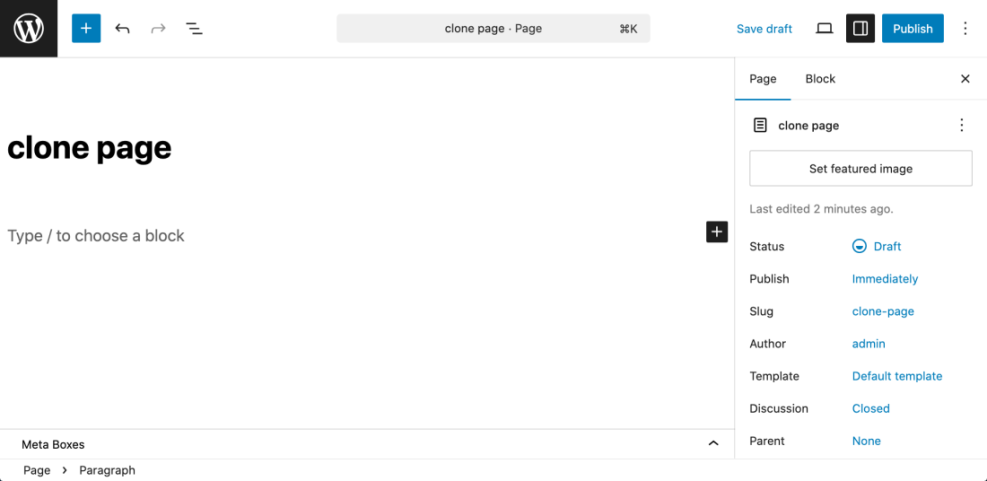
Verify success when the new page displays the same blocks, sections, and basic layout as the original. Remember that this method may not copy featured images, SEO metadata, or some custom settings, so you will need to review those manually.
Step 5: Edit and Publish Your Cloned Page
Cloning a page in WordPress is only half of the job. You must now update titles, URLs, and on page content so visitors and search engines see the new page as unique and useful.
- Open the cloned page in the editor and change the Title to match the new purpose of the page.
- Edit the URL slug or Permalink so it reflects the new page (for example change /service-a/ to /service-b/).
- Update headings, paragraphs, and images to match the new topic while keeping the overall layout you cloned.
- Check any internal links or buttons on the cloned page to make sure they point to the correct pages and not back to the original page.
- Preview the cloned page, check it on desktop and mobile, then click Publish or Update when everything looks correct.
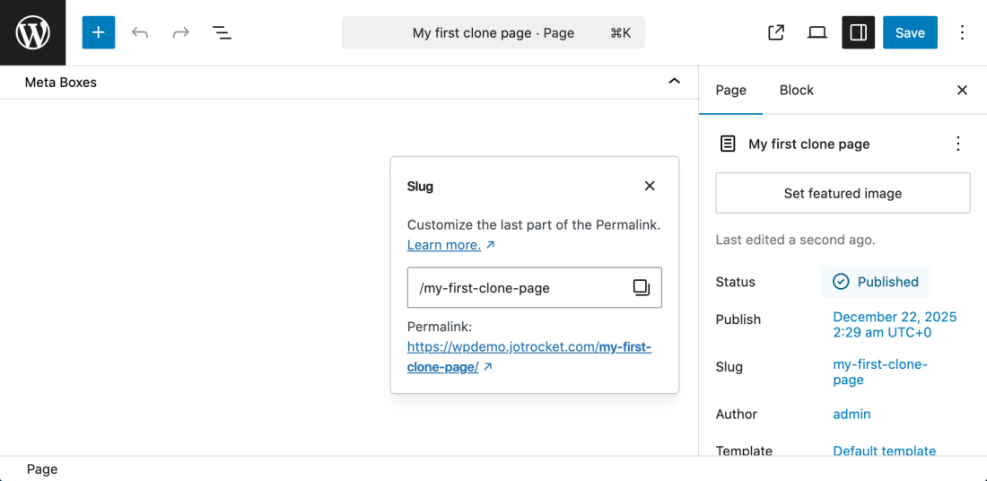
Verify success when your new page has its own title, URL, and content, but keeps the layout and structure you liked from the original. At this point, you have fully reused your design and avoided the risk of near duplicate content.
Step 6: Troubleshoot Common WordPress Cloning Issues
Sometimes cloning a page in WordPress does not work exactly as expected. Here are common issues and how to fix them so you can continue duplicating pages safely.
- You do not see Clone links under page titles
Check that your duplicate page plugin is installed and activated. Confirm that your user role has permission to duplicate content in the plugin settings. - Cloned page shows wrong language or menu
If you use multilingual or menu plugins, double check their settings. Some plugins treat cloned pages as new content and require you to reassign menus or translations. - Page builder content did not clone correctly
Open the page with your page builder and look for its own Duplicate or Save as template option. Many builders have their own cloning tools that work better with complex layouts. - SEO plugin shows duplicate title or description
Open the SEO settings panel on the cloned page and update the SEO title and meta description so they reflect the new topic instead of copying the old ones. - Visitors can still access the old layout URL
If you changed URLs or removed alternate clones, use a redirect plugin or your host’s tools to redirect old URLs to the correct new URL.
Verify success when your cloning workflow is predictable, every cloned WordPress page has unique content, and visitors only see the versions you want them to see.
Frequently Asked Questions About Cloning Pages in WordPress
Is it safe to clone a page in WordPress on a live site
Will cloning a page in WordPress hurt my SEO
Can I clone a WordPress page without installing a plugin
What is the difference between cloning and using reusable blocks or patterns
Should I experiment on a staging site first