When you learn how to make WordPress faster, every page on your site feels smoother, more professional, and easier to use. A faster site keeps visitors around longer, helps your content rank better, and reduces frustration on slow mobile connections.
In this guide you will run a quick speed test, fix slow hosting bottlenecks, turn on caching, optimize images, clean up heavy plugins and the database, and check your Core Web Vitals. By the end, you will have a practical checklist you can reuse any time you want to make WordPress faster without breaking your layout.
What You Need Before You Make WordPress Faster
- Administrator access to your WordPress dashboard.
- Login details for your hosting control panel or managed hosting dashboard.
- Permission to install or configure caching and optimization plugins.
- A recent backup of your site (files and database) stored safely.
- Optional staging site if you want to test changes before applying them live.
Step 1: Run a Baseline Speed Test
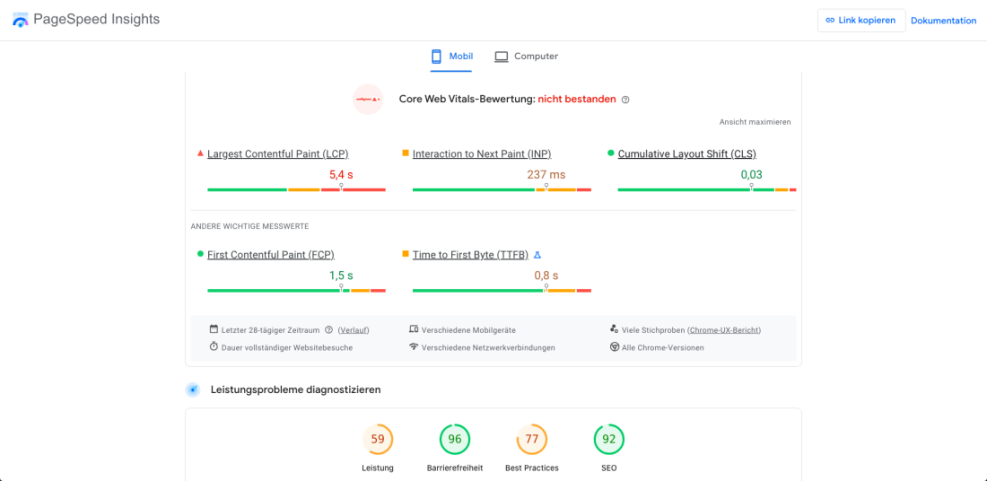
Before you make WordPress faster, you need to know how slow it is and what is actually causing issues. A baseline test gives you numbers you can compare after each improvement.
- Open a speed testing tool in your browser, such as PageSpeed Insights or GTmetrix.
- Paste your homepage URL and click Analyze or Test.
- Repeat the test for one or two important internal pages, such as a blog post or sales page.
- Write down your mobile and desktop scores, Largest Contentful Paint (LCP), and Total Blocking Time (TBT) or similar metrics.
The suggestions section will usually mention caching, image optimization, or render blocking scripts. These hints will guide the rest of your work to make WordPress faster in a focused way.
Common Bottlenecks That Slow WordPress Down
The table below summarizes the most frequent problems you will see in speed reports and where to apply quick fixes.
| Speed Area | Common Problem | Quick Win | Where to Learn More |
|---|---|---|---|
| Hosting & Server | Slow first byte time (TTFB), frequent timeouts. | Use quality WordPress hosting and built in caching. | Beginner checklist optimizing WordPress blog posts |
| Caching Setup | No page cache or misconfigured cache rules. | Enable full page caching via host or plugin. | Beginner guide to WordPress speed optimization |
| Images | Huge, uncompressed images on every page. | Compress images and use modern formats like WebP. | Beginner Guide to WordPress Speed Optimization |
| CSS & JavaScript | Render blocking files and extra scripts from plugins. | Minify and defer non critical assets. | WordPress seo complete beginners guide |
| Database & Plugins | Bloated options, transients, and unused plugins. | Clean database safely and remove heavy add ons. | Developer hooks for WordPress database and file optimization |
| Core Web Vitals | Slow LCP and layout shifts on mobile. | Reduce above the fold weight and stabilize layout. | Beginner guide WordPress speed core web vitals |
Step 2: Fix Hosting Issues That Limit Speed
Even the best caching plugin cannot fully make WordPress faster if the underlying server is overloaded or underpowered. A quick hosting check often reveals easy wins.
- Log in to your hosting control panel or managed WordPress dashboard.
- Check your plan resources: PHP version, memory limit, and CPU usage if your host shows it.
- Make sure you are running a modern PHP version supported by WordPress (for example PHP 8.x).
- Look for a one click Server Caching or Performance toggle and enable it if recommended by your host.
If your site still feels slow after caching and optimization, or you outgrow low cost shared hosting, upgrading plans can sometimes make WordPress faster overnight without changing anything else.
Step 3: Turn On Caching to Make WordPress Faster Everywhere
Caching is usually the single biggest improvement you can make to WordPress speed in a few minutes. It stores full page copies so the server does less work for each visit.
- From your WordPress dashboard, go to Plugins » Add New Plugin.
- Search for a reputable WordPress caching plugin, or use the one recommended by your host.
- Click Install Now, then Activate.
- Open the plugin settings page from the left menu.
Most caching plugins offer a simple mode that is safe for beginners and still helps make WordPress faster without complex tuning.
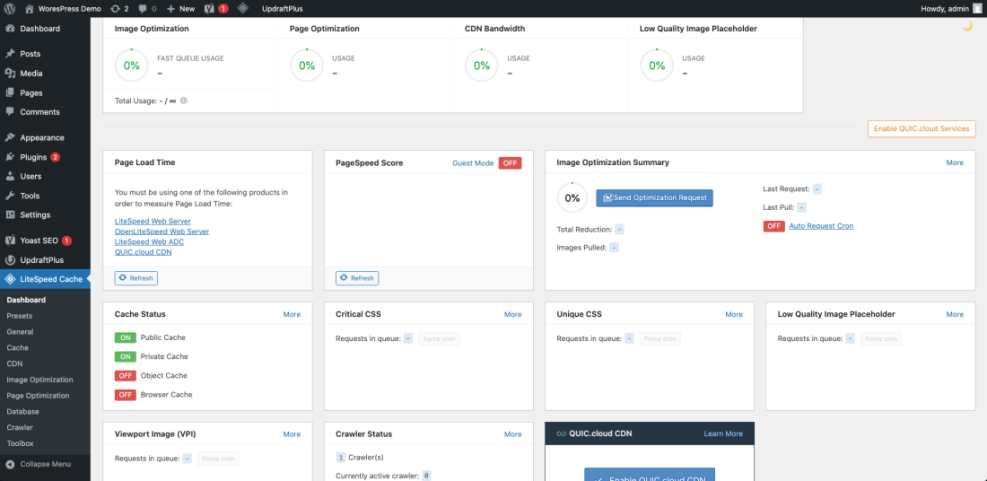
- Turn on Page Caching or Static Cache for all public pages.
- If available, enable Browser Caching and GZIP or Brotli Compression.
- Save changes, then click the option to Clear Cache so your pages are rebuilt.
- Run your speed test again to compare before and after caching.
Step 4: Optimize Images for Faster Loading
Large images are one of the most common reasons a site feels slow, especially on mobile data. Compressing and resizing images is a reliable way to make WordPress faster without changing content.
- Install a trusted image optimization plugin from Plugins » Add New Plugin.
- Activate the plugin and open its settings page.
- Enable lossless or smart compression so images are optimized without looking blurry.
- Turn on lazy loading so images below the fold load only when a visitor scrolls down.
Many plugins also convert files to WebP format, which can significantly reduce size and help make WordPress faster on image heavy posts.
- Run the plugin’s Bulk Optimize or Bulk Compress feature to process your existing media library.
- Upload a new test image and confirm it is automatically compressed.
- Retest a long blog post with many pictures to confirm improved load time.
Step 5: Minify and Defer CSS and JavaScript
After caching and images, extra CSS and JavaScript can still slow your site down. Careful optimization of these files is another key step to make WordPress faster.
- Open your caching or optimization plugin settings again.
- Find the section for CSS / JS Optimization or File Optimization.
- Enable Minify CSS and Minify JavaScript.
- If the plugin offers it, enable Combine CSS or Combine JS for fewer requests.
Start with the safer options first. Some aggressive settings might break menus or sliders, so test each change carefully as you work to make WordPress faster in a stable way.
- Turn on Defer JavaScript or Load JavaScript deferred if your plugin supports it.
- Save settings and clear your cache again.
- Visit your site in an incognito window and click through key pages to confirm everything still works.
- Run another speed test to check for improvements in render blocking resources.
Step 6: Clean Up Heavy Plugins and the Database
Too many plugins or years of unused data can quietly slow your site down. Cleaning up safely can make WordPress faster and more stable.
- From the dashboard, go to Plugins » Installed Plugins.
- Deactivate plugins you no longer use, then click Delete for each of them.
- Be cautious with eCommerce, membership, or form plugins; do not remove anything that stores important data.
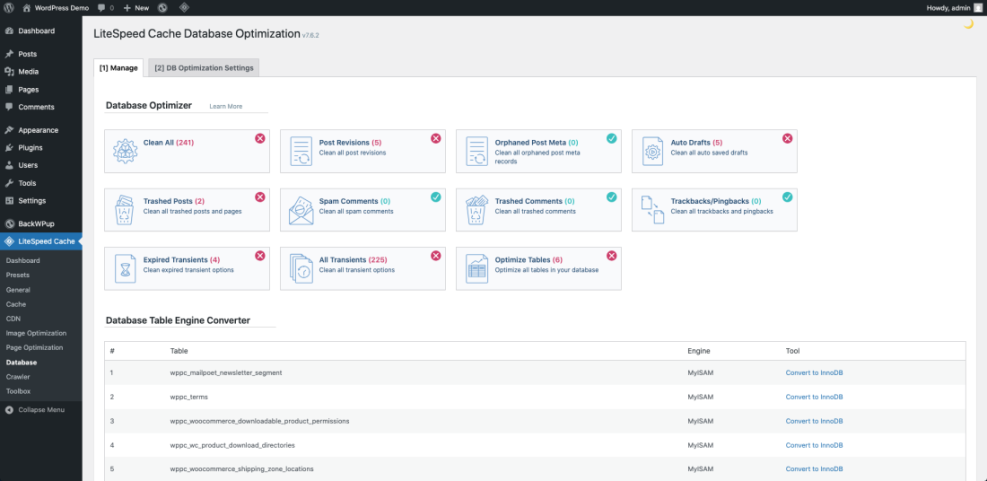
- Install a trusted database optimization plugin if your caching tool does not include one.
A good database cleaner lets you remove old post revisions, trashed posts, and expired transients without touching core tables.
- Take a fresh backup before running any database cleanup.
- Select only safe items such as post revisions, trash, and expired transients.
- Run the optimization and wait for it to complete.
- Browse your site and admin area to make sure everything still works as expected.
Step 7: Add a CDN for Global Visitors (Optional)
If you have visitors from around the world, a Content Delivery Network (CDN) can help make WordPress faster by serving assets from servers closer to each visitor.
- Choose a CDN that works well with WordPress and your hosting plan.
- Create an account and follow the onboarding steps.
- Depending on the provider, either update your DNS to point through the CDN or install their WordPress plugin.
- Enable caching for static assets like images, CSS, and JavaScript.
After the CDN goes live, your speed tests should show faster response times from regions far away from your main server, helping make WordPress faster for everyone.
Step 8: Check Core Web Vitals and Mobile Experience
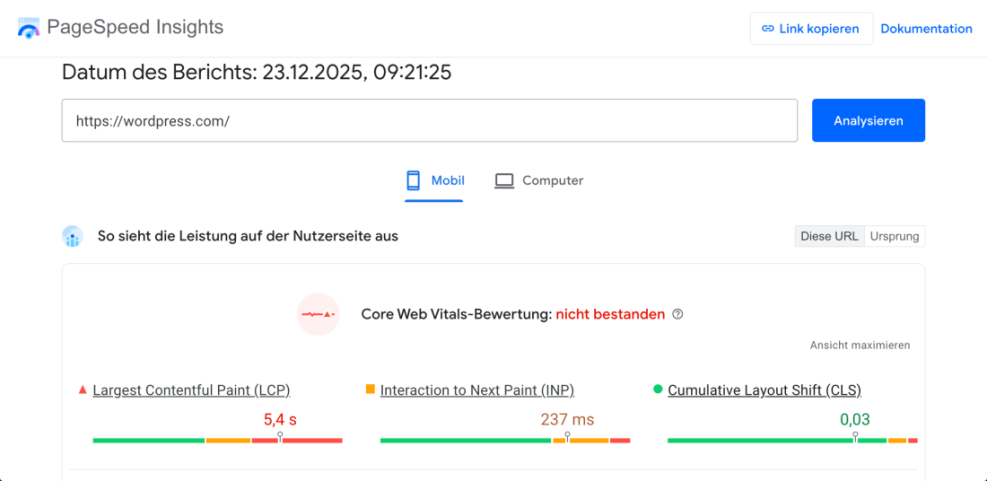
Once your main optimizations are in place, revisit your speed tests to confirm that Core Web Vitals have improved, especially on mobile. This step makes sure your work to make WordPress faster aligns with real user experience.
- Open PageSpeed Insights again and test your homepage and a long article.
- Focus on Largest Contentful Paint (LCP), First Input Delay (or its replacement), and Cumulative Layout Shift (CLS).
- Check the Opportunities and Diagnostics sections for remaining issues.
- Fix remaining layout shifts by setting explicit width and height on images and ads.
If metrics are still weak, you may need more advanced tuning. At this point your basic checklist to make WordPress faster is complete, and you can move into specialized guides for further gains.
Step 9: Review Your Site Like a Visitor
Technical scores are useful, but the real test is how your site feels. A final review helps you confirm that your work to make WordPress faster did not harm usability.
- Open your homepage, a key blog post, and any sales or signup pages in an incognito window.
- Load them on both desktop and a real mobile device using Wi Fi and mobile data.
- Scroll, click menus, open popups, and submit forms to confirm everything behaves correctly.
- Watch for elements that pop in late or jump around as ads and images load.
- Note any remaining slow spots and schedule time to fix them using the deeper guides linked above.
If pages feel responsive, scroll smoothly, and show content quickly, you have successfully started to make WordPress faster in a sustainable way.
Conclusion You Can Make WordPress Faster Without Breaking It
You have walked through a practical process to make WordPress faster: testing your current speed, fixing hosting issues, enabling caching, optimizing images, tuning CSS and JavaScript, cleaning up plugins and the database, considering a CDN, and checking Core Web Vitals.
Use this checklist whenever you launch a new site or redesign. For very busy blogs or online stores, pair these steps with deeper guides on caching and performance. With a consistent process, every change you make will keep WordPress fast instead of slowly adding more weight over time.
Further Reading
- Beginner Guide to WordPress Speed Optimization
- Beginner guide to WordPress speed optimization
- Beginner checklist optimizing WordPress blog posts
- Beginner guide WordPress speed core web vitals
- WordPress seo complete beginners guide
Frequently Asked Questions About Making WordPress Faster
What is the easiest way to make WordPress faster
Will too many plugins always slow down WordPress
How fast should my WordPress site be
Can changing themes make WordPress faster
Do I need a CDN to make WordPress faster
How often should I review performance after I make WordPress faster