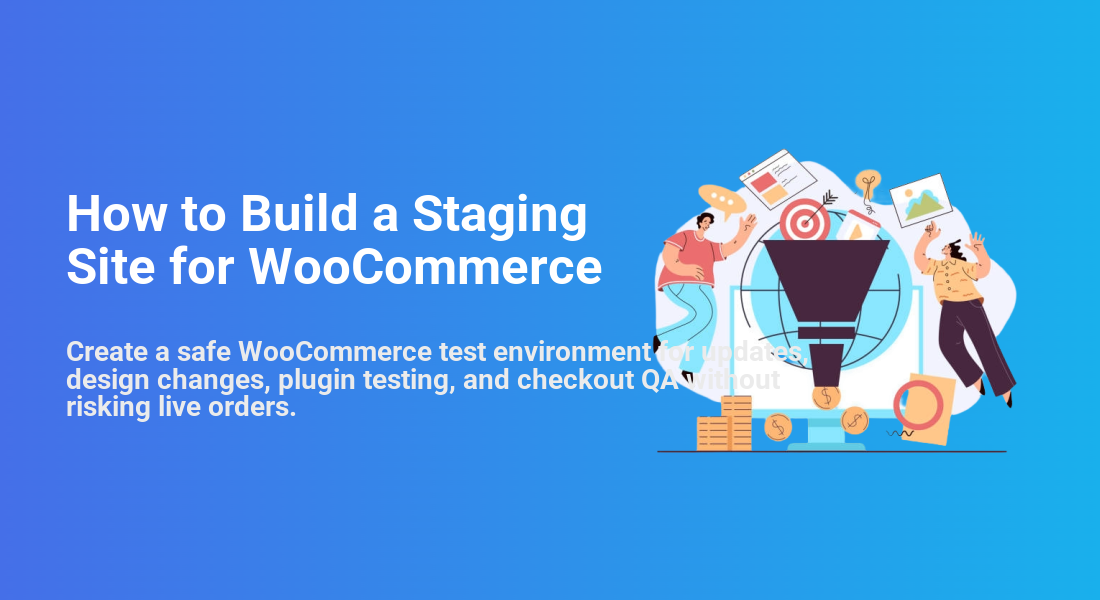
How to Build a Staging Site for WooCommerce
Create a safe WooCommerce test environment for updates, design changes, plugin testing, and checkout QA without risking live orders.

A WooCommerce staging site is a private copy of your online store where you can test updates, plugins, theme changes, checkout flows, and custom code before touching your live site. For stores that take real orders, this is one of the safest ways to avoid broken carts, failed payments, layout problems, and unexpected downtime.
In this guide, you will build a staging site for WooCommerce, protect it from search engines and customers, test it properly, and prepare changes for launch. If you are still clarifying how WooCommerce fits into WordPress, start with this guide on the difference between WordPress and WooCommerce so the staging workflow makes more sense.
The process below works best for store owners, developers, and agencies who want a repeatable testing environment instead of making risky changes directly on production.
Prerequisites
Before you create a WooCommerce staging site, make sure you have access to the tools and accounts needed to copy, protect, and test your store safely.
- Hosting access: Your hosting dashboard, cPanel, managed WordPress panel, or server control panel.
- WordPress admin access: An administrator account for the live store.
- A recent backup: A full backup of your files and database before making any copy.
- Payment gateway test credentials: Stripe, PayPal, or other sandbox keys for checkout testing.
- Basic store knowledge: Your key checkout, shipping, tax, email, and order workflows.
If your store does not have a reliable backup process yet, review your WooCommerce backup plugin options for online stores before continuing.
Step 1: Back Up Your Live WooCommerce Store
A staging site starts with a safe copy of your live store. Before you duplicate anything, create a full backup that includes both WordPress files and the database.
- Log in to your hosting dashboard or backup plugin.
- Create a full site backup, including
wp-content, plugins, themes, uploads, and the database. - Download a copy if your host allows local backup storage.
- Confirm the backup completed successfully before moving to the next step.
Checkpoint: You should see a completed backup entry with a timestamp from today and no warning or failed status.
Troubleshooting: If the backup fails, check available disk space, PHP memory limits, and whether your backup plugin excludes large upload folders. Do not continue until the backup succeeds.
Step 2: Choose the Best Staging Method
There are three common ways to build a WooCommerce staging site. The right method depends on your host, budget, and technical comfort level.
- Managed hosting staging: Best for most store owners because it usually includes one-click staging and controlled push-to-live tools.
- Staging plugin: Useful when your host does not include staging, but you need to watch storage limits and compatibility.
- Manual subdomain copy: Best for developers who are comfortable with databases, file managers, WP-CLI, and search-replace operations.
For most WooCommerce stores, managed hosting staging is the safest option because it reduces the chance of missing files, corrupting serialized data, or accidentally overwriting live order tables.
Step 3: Create the WooCommerce Staging Site
The easiest method is to use your host’s staging tool. Exact labels vary by provider, but the workflow is usually similar.
- Log in to your hosting dashboard.
- Open the site management area for your WooCommerce store.
- Look for a menu item named Staging, Environments, Dev Site, or Create Staging.
- Select your live site as the source.
- Choose Full copy if the tool asks whether to copy files, database, or both.
- Start the staging creation process.
Checkpoint: Your host should generate a staging URL, such as staging.example.com or example.wpenginepowered.com, and show the environment as active.
Troubleshooting: If the staging creation fails, temporarily disable backup plugins, clear old staging copies, increase hosting storage, and retry. Large WooCommerce upload folders and log files are common causes of failed staging builds.
Step 4: Protect the Staging Site from Customers and Search Engines
Your staging site should not be public. Customers should not be able to place real orders, and search engines should not index duplicate product pages.
- Open the WordPress admin dashboard for the staging site.
- Go to Settings > Reading.
- Enable Discourage search engines from indexing this site.
- Save your changes.
- Add password protection from your host or use HTTP authentication if available.
You should also confirm that the staging site has a visible admin notice or environment label so your team does not confuse it with production.
Checkpoint: The staging site should require a password, show a staging URL, and include a noindex setting.
Troubleshooting: If customers can access the staging URL, enable server-level password protection from your host. WordPress privacy settings alone are not enough for a private WooCommerce test environment.
Step 5: Configure WooCommerce for Safe Testing
After the copy is created, adjust WooCommerce settings so the staging store cannot accidentally process real payments, email customers, or trigger production automations.
- Go to WooCommerce > Settings > Payments.
- Switch payment gateways to test mode where available.
- Replace live API keys with sandbox or test credentials.
- Go to WooCommerce > Settings > Emails and review recipient addresses.
- Disable marketing, CRM, shipping label, accounting, and fulfillment automations that should not run from staging.
- Review webhooks under WooCommerce > Settings > Advanced > Webhooks.
Checkpoint: Test orders should use sandbox payment methods, admin emails should go only to your team, and external automations should be disabled or pointed to test accounts.
Troubleshooting: If a real payment gateway still appears at checkout, clear your cache, confirm the gateway is in test mode, and check whether another payment plugin is injecting live checkout options.
Step 6: Test Updates, Plugins, Themes, and Checkout
Now you can use the staging site for its main purpose: testing changes before they reach customers. This is especially important for WooCommerce because plugin conflicts can affect carts, checkout fields, shipping rates, taxes, and payment gateways.
- Update WordPress core, WooCommerce, plugins, and themes on staging first.
- Clear all caching layers after updates.
- Open a product page and add an item to the cart.
- Apply a coupon if your store uses discounts.
- Test shipping calculation and tax display.
- Complete a sandbox checkout.
- Confirm the order appears under WooCommerce > Orders.
- Review email notifications, order notes, stock reduction, and customer account behavior.
You should also test performance-sensitive changes because slow checkout pages directly affect revenue. For deeper optimization planning, review these WooCommerce performance tips for faster stores.
Checkpoint: A successful staging test should complete checkout, create an order, send the expected test emails, update inventory, and show no visible PHP errors or layout issues.
Step 7: Compare Staging Against the Live Store
Before you approve changes, compare the staging site with the live store. You are looking for broken layouts, missing content, failed scripts, incorrect prices, and checkout differences.
- Compare the homepage, product category pages, single product pages, cart, checkout, and account pages.
- Test desktop and mobile layouts.
- Check browser console errors on important pages.
- Verify product images, variation dropdowns, related products, and upsells.
- Confirm shipping, tax, coupon, and payment behavior.
Checkpoint: Staging should look and behave like production, except for intentional changes and test-mode integrations.
Troubleshooting: If staging looks broken but live does not, clear server cache, plugin cache, browser cache, and CDN cache for the staging environment. Also confirm the staging site copied all theme files and upload folders.
Step 8: Push Approved Changes to the Live Store Safely
Pushing staging changes back to live requires extra care for WooCommerce. A normal brochure site can often push files and database together, but a store keeps changing as customers place orders.
- Schedule the launch during a low-traffic period.
- Create a fresh live backup immediately before launch.
- Put the live store in maintenance mode only if checkout must be paused.
- Push files first when possible, especially theme, plugin, and code changes.
- Avoid overwriting live WooCommerce order, customer, subscription, and inventory tables unless you are performing a controlled migration.
- Run a final checkout test on production after launch.
Checkpoint: The live store should show the approved design or functionality changes while preserving new orders and customer activity from the live environment.
Troubleshooting: If the push-to-live tool only supports a full database overwrite, contact your host or developer before proceeding. A full overwrite can remove orders created after the staging copy was made.
Step 9: Build a Manual Staging Site with WP-CLI
If your host does not provide staging and you are comfortable with command-line work, you can create a manual staging copy. Run these commands from an SSH terminal connected to your server, and adjust paths and domains for your environment.
First, copy the live files to a staging directory:
cp -a /home/example/public_html/ /home/example/staging_html/Next, export the live database:
cd /home/example/public_html/
wp db export live-store.sql
Then create or select a staging database, import the database, and update the site URLs:
cd /home/example/staging_html/
wp db import ../public_html/live-store.sql
wp search-replace 'https://example.com' 'https://staging.example.com' --skip-columns=guid
Finally, update wp-config.php in the staging copy so it points to the staging database, not the live database.
Checkpoint: The staging URL should load independently, WordPress admin should work, and database changes on staging should not affect the live store.
Troubleshooting: If both sites change at the same time, the staging copy is probably still connected to the live database. Stop testing and correct the staging database credentials immediately.
Step 10: Use a WooCommerce Staging Checklist Every Time
A checklist makes your staging process repeatable. Use the same QA steps every time you update WooCommerce, install a plugin, change a theme, or edit checkout behavior.
- Full backup completed before staging work.
- Staging protected with password access.
- Search indexing disabled.
- Payment gateways switched to sandbox mode.
- Customer emails and automations disabled or redirected.
- Plugin, theme, and WooCommerce updates tested.
- Product, cart, checkout, and account pages reviewed.
- Sandbox order completed successfully.
- Mobile layout tested.
- Live deployment plan documented.
Checkpoint: Your team should be able to repeat the same process without guessing which tests matter.
Troubleshooting: If bugs keep reaching production, expand your checklist with the exact page, plugin, or checkout scenario that failed.
Your WooCommerce Store Is Now Safer to Update
A staging site gives you a safe place to test WooCommerce changes before customers experience them. By backing up first, protecting the staging environment, switching integrations to test mode, and carefully pushing only approved changes, you reduce the risk of broken checkouts and lost sales.
The most important habit is consistency. Use staging before every major update, plugin change, checkout adjustment, or theme edit, and keep a written checklist so your store becomes easier to maintain over time.
Further Reading
- WordPress Backup Strategy
- WooCommerce Performance for Faster Checkouts
- WooCommerce Hardening Checklist
Frequently Asked Questions
Do I need a staging site for every WooCommerce store?
Why does my staging checkout still show real payment methods?
Can I push the entire staging database to my live store?
What should I test before launching staging changes?
How much does a WooCommerce staging site cost?